

Why the best cultural brands are built with people, not presented to them.
MHM Director Debbie Spence draws on a brand transformation with the National Children’s Orchestras of Great Britain to explain why co-creation is not a nice-to-have, but a strategic advantage.
Brand strategy and co-creation: MHM | Creative identity and website: The Yard Creative | Client: NCO (National Children’s Orchestras of Great Britain).
There is a familiar moment in almost every rebrand.
The new identity is unveiled. The typography is beautiful. The colours are considered. The brand guidelines are immaculate. Everyone applauds.
And then, six months later, the organisation is still telling the same story, making the same decisions and struggling to explain why it matters to anyone beyond its existing audience.
The design may be excellent.
But has anything really changed?
At MHM, mhm.co we believe the most valuable thing about a brand strategy isn’t what it says about an organisation. It’s the difference it helps that organisation make.
And that requires a rather different approach to building one.
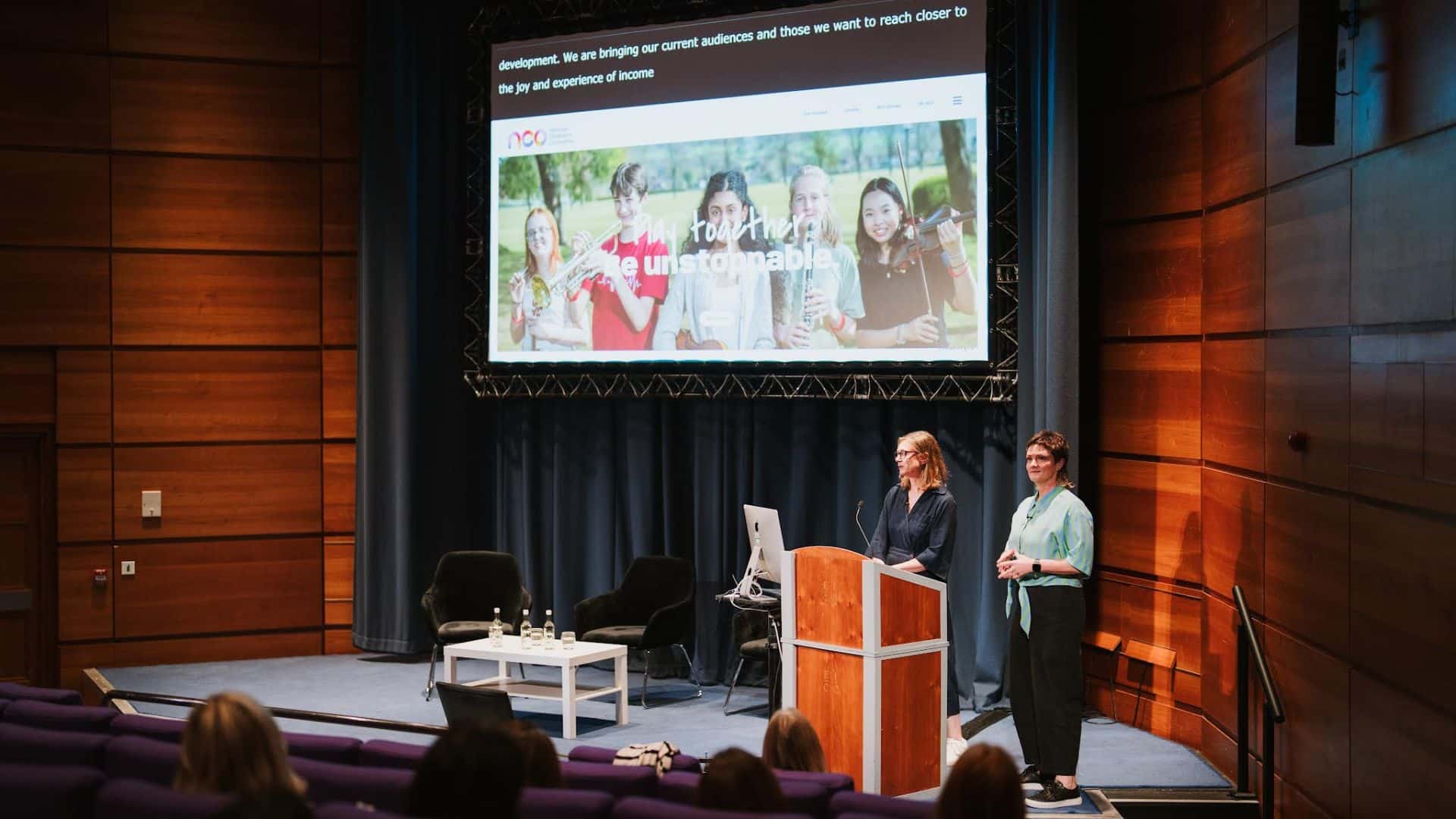
Your brand is everyone’s business
Too often, brand strategy is treated as a marketing project.
The marketing team commissions an agency. Senior leaders approve the positioning. A creative team develops the identity. Everyone else is introduced to the results.
But a brand isn’t something the marketing department owns. It’s the promise an organisation makes to the world, expressed through everything it does.
It’s there in artistic programming and curatorial choices. In the visitor experience. In fundraising conversations, recruitment, partnerships and the decisions made around the board table.
Most importantly, it’s experienced and judged by the people the organisation exists to serve.
If your brand strategy doesn’t influence those things, you may have a new identity.
You probably don’t have a new strategy.
Are you telling the whole story?
This was the challenge facing the National Children’s Orchestras of Great Britain (NCO).
NCO was already doing extraordinary work, nurturing some of the country’s most talented young musicians.
Within the orchestral world, it was respected for its artistic excellence. But its reputation told only part of the story.
For the children and families involved, NCO was about much more than becoming a better musician.
It was about belonging. Friendship. Confidence. Resilience. Finding your voice.
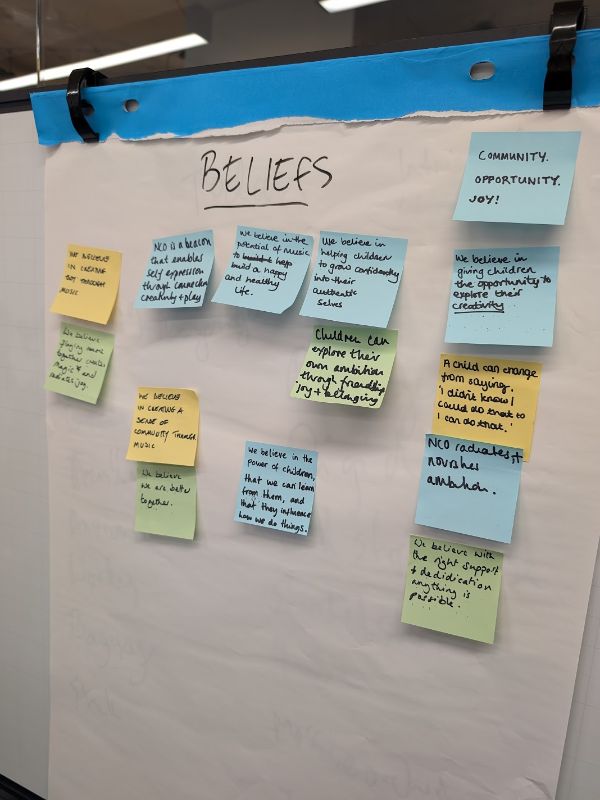
As one parent put it:
“My child has found her voice at NCO. She’s not just a better musician, she’s a stronger person.”
That was a much bigger story, with the potential to connect with a much wider world.
Using MHM’s Organisational Positioning Map, we identified an opportunity to move from an artistically led, peer-focused positioning towards one that was vision-led and audience-focused.
This wasn’t about abandoning musical excellence. Quite the opposite.
It was about recognising that NCO’s value extended well beyond the rehearsal room.
The strategic challenge wasn’t to make the organisation louder.
It was to make its relevance clearer.
What happens when you let people help shape the answer?
Rather than developing the strategy behind closed doors and presenting it for approval, we invited the people who knew NCO best to help create it.
More than 400 children, parents and carers, staff, trustees, donors and other stakeholders took part.
And we didn’t just ask them what they thought of the existing brand.
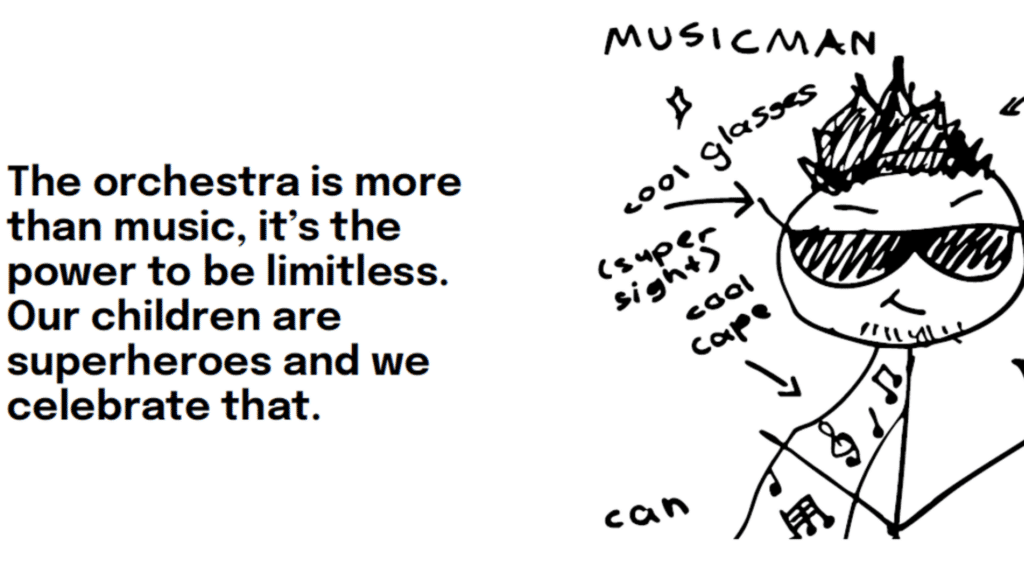
We asked children to draw NCO as a superhero. Parents to share the moments that made them proudest. Staff to describe what made NCO extraordinary. Trustees to consider the organisation’s wider role in society.
There were drawings, lively debates, unexpected insights and plenty of laughter.
There was also a serious purpose.
Traditional research can tell us what people recognise, remember or prefer. Creative, participatory methods can help uncover something deeper: what people value, what gives them a sense of belonging and what an organisation really means in their lives.
For NCO, those insights revealed an emotional proposition far more powerful than artistic achievement alone.
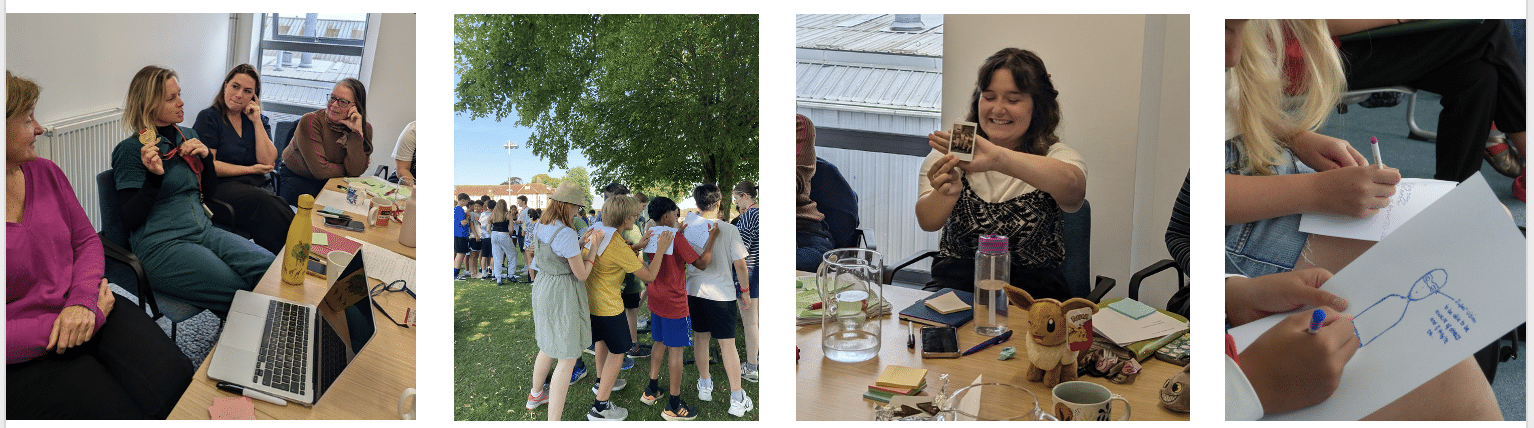
The resulting strategic brand idea was beautifully simple:
Together in music, limitless in life.
It captured both the excellence of the musical experience and the wider possibilities it creates for young people.
But a strategy only matters if people can bring it to life.
This was a genuinely collaborative effort, shaped by the vision and commitment of Sophie Lewis, NCO’s Chief Executive, Becky Cresswell, Communications Director, and the brilliant NCO team. Their willingness to question assumptions, listen to young people and embrace a bigger ambition for the organisation was fundamental to the work.
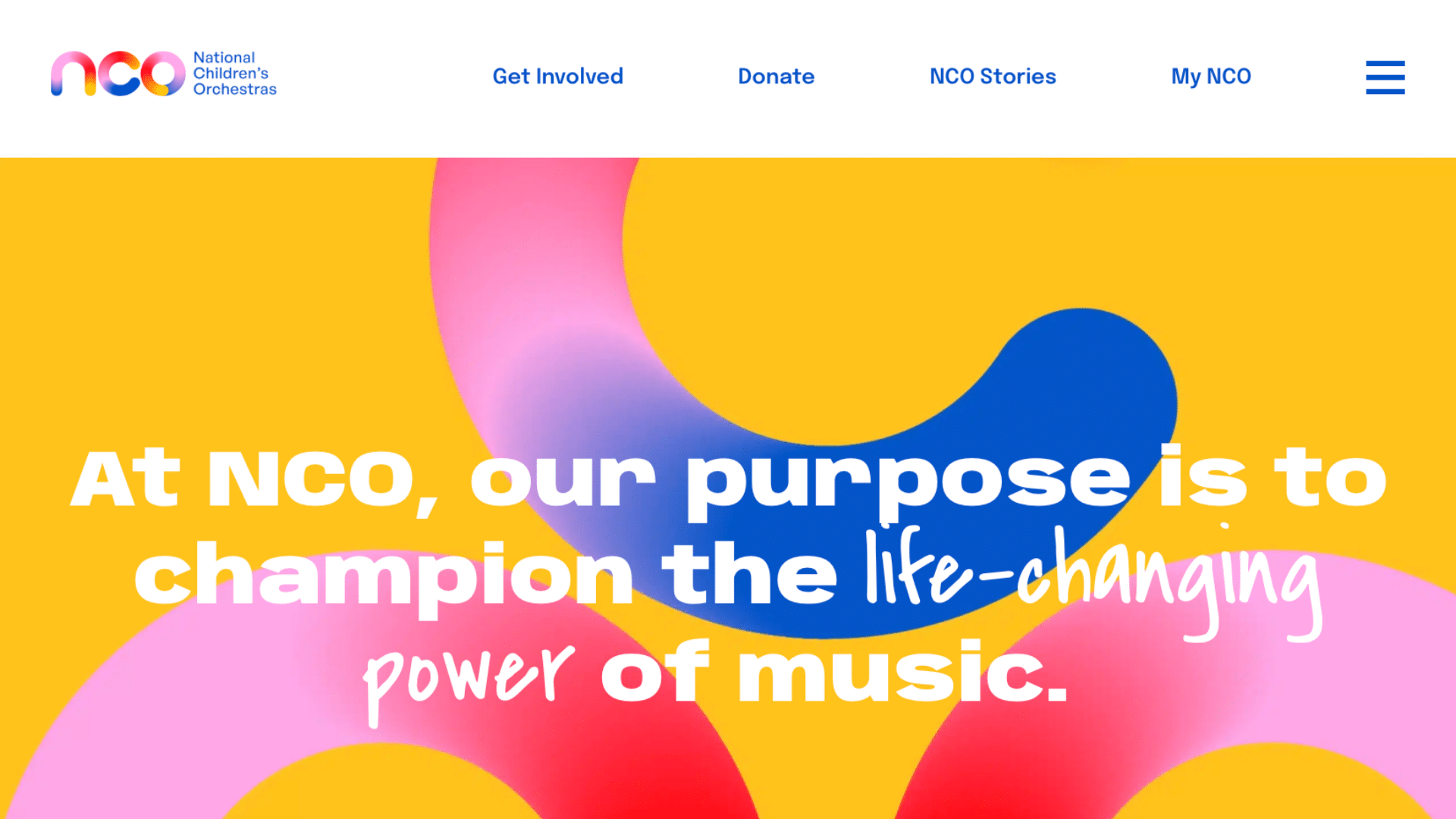
Working alongside MHM and NCO, The Yard Creative translated that strategic thinking into a vibrant new visual identity and website, full of the energy, imagination and joy of making music together.
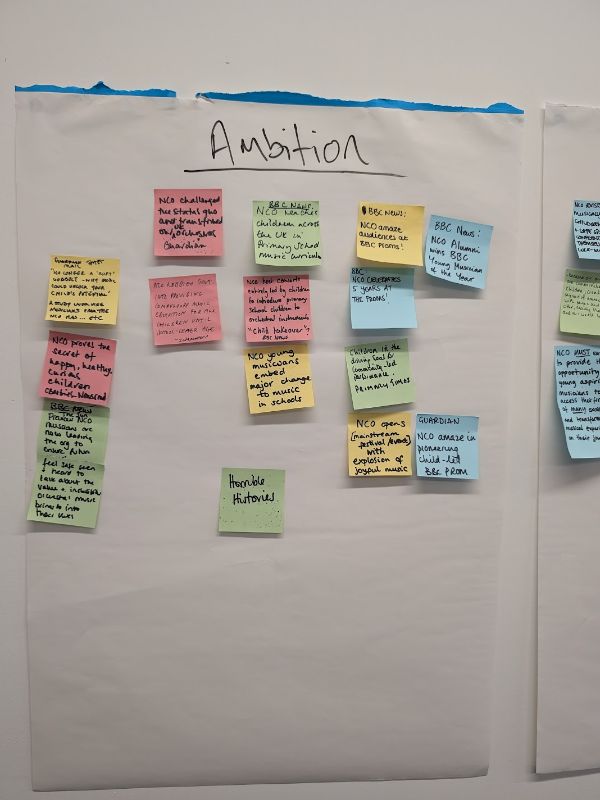
The public-facing expression, Play together. Be unstoppable., captures that ambition beautifully.
It’s a lovely example of what happens when strategy and creative expression work together. MHM helped articulate what NCO stands for and why it matters. The Yard Creative made that thinking visible and distinctive. And the NCO team continues to make it meaningful through the organisation’s work.
Because the best brands aren’t simply created by agencies and handed over to clients.
They’re built together, and brought to life by the people who believe in them.
Co-creation is not design by committee
There’s an important distinction here.
Co-creation doesn’t mean everyone gets to choose their favourite logo, write a mission statement or vote on the final strategy.
That would be a recipe for compromise, not clarity.
Good co-creation combines rigorous research, expert judgement and meaningful participation.
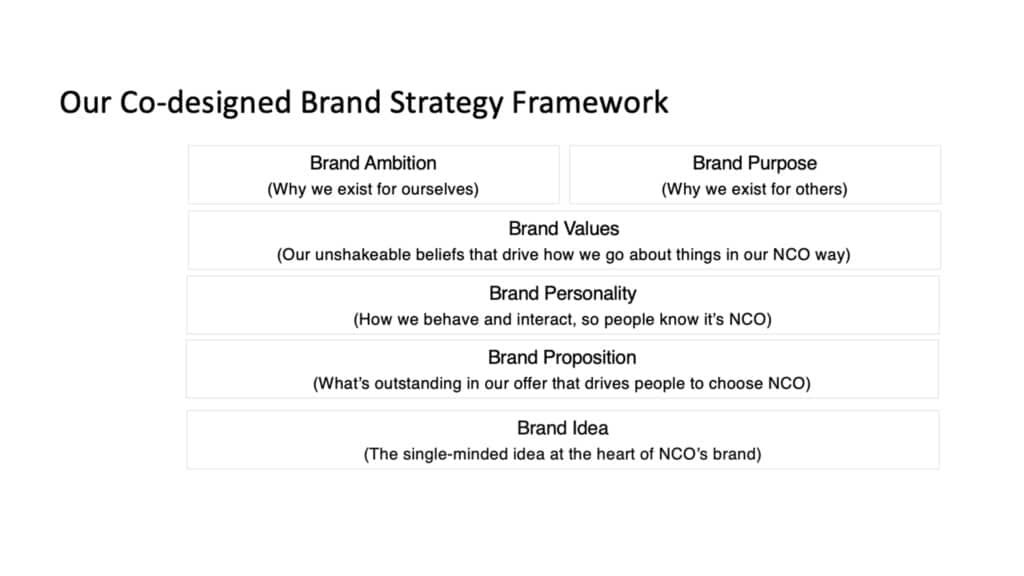
We use approaches such as the Design Council’s Double Diamond to create space for different perspectives, challenge assumptions, identify opportunities and then make clear strategic choices.
The process is deliberately expansive before it becomes selective.
Because listening to everyone doesn’t mean trying to please everyone.
It means making better-informed choices about what matters most.
Done well, co-creation does two things at once: it produces a stronger strategy and builds the organisational confidence to act on it.
That second benefit is frequently underestimated.
The real measure of a brand isn’t awareness. It’s ownership.
One of the most interesting things about the NCO project was what happened after the strategy was agreed.
Staff and trustees reported greater confidence and affinity with the brand. Fundraising propositions began telling a broader story of societal impact. The website presented NCO as a community, not simply an elite musical institution.
In the two months following the rebrand, engagement from non-followers increased by 20% on Facebook and 50% on Instagram.
These are early indicators, not definitive proof of long-term impact. But they suggest the new positioning was beginning to connect beyond NCO’s established community.
At MHM, we talk about an Engagement Ladder of Brand Connection.
People move from awareness — I’ve heard of you — to understanding — I get what you do — to connection — I care about what you do.
At the top sits something much more powerful.
Ownership: I tell your story for you.
That’s what co-creation makes possible.
When people help shape a strategy, they are more likely to recognise its value, champion it and bring it to life.
The strategy stops being something that was done to them.
It becomes something they believe in.
The question isn’t whether you need a rebrand
It’s whether your existing brand is helping your organisation become what it needs to be.
Can your audiences explain why you matter? Are you understood beyond your existing sector? Does your strategy give staff and leadership a shared basis for making decisions? Can people see the connection between what you promise and what they actually experience?
And perhaps most importantly:
If you took away your logo, would people still recognise what makes your organisation distinctive?
A strong visual identity matters enormously. But its job is to express a clear, compelling strategy, not compensate for the absence of one.
The cultural organisations that will matter most in the future won’t necessarily be those with the biggest marketing budgets or the boldest visual identities.
They’ll be those with a clear understanding of their distinctive value, the confidence to make choices and the ability to bring their people and audiences with them.
That is the real work of brand strategy.
And it’s far more interesting than choosing a new colour palette.
Download the research
In Debbie Spence’s paper, Co-creating connection: The brand transformation of the National Children’s Orchestras of Great Britain, published in the Journal of Brand Strategy, she explores the process, methods and early outcomes in more detail, including MHM’s Organisational Positioning Map and Engagement Ladder of Brand Connection.
Is it time to rethink your brand?
At MHM, we work with museums, galleries, performing arts organisations and cultural institutions to develop brand strategies grounded in audience insight, shaped through collaboration and designed to guide real organisational decisions.
Whether you’re considering a brand refresh, repositioning your organisation or questioning whether your current story reflects your future ambition, we’d welcome a conversation.
Because the best brands aren’t simply understood by the people they serve.
They’re believed in.