Our Thinking
Beyond the blockbuster
Two very different invitations into Korean art. And a reminder that the best exhibition strategies start with people, not just programmes.
I’ve spent the past few days in San Francisco, working with museum clients and squeezing in a little time to see some art.
By happy coincidence, two museums I’ve had the pleasure of working with are currently showing major exhibitions of Korean art.
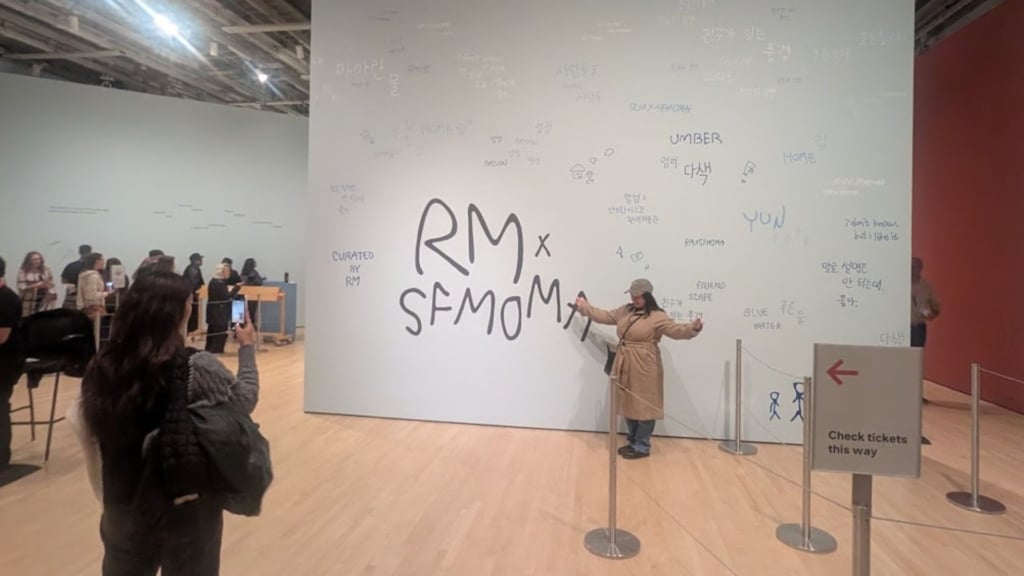
At SFMOMA, RM x SFMOMA: Between You and Me brings together works from the personal collection of RM, leader of K-pop phenomenon BTS, alongside works from the museum’s collection.
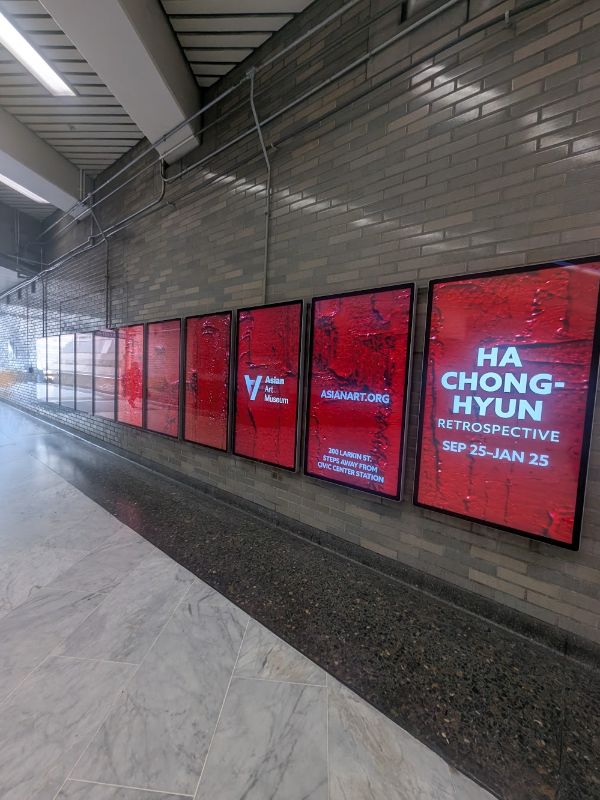
Across town, the Asian Art Museum’s Ha Chong-Hyun: Retrospective explores six decades of work by one of Korea’s most influential contemporary artists.
Both are ambitious exhibitions. Both contribute to a growing international interest in Korean art. But they offer very different ways in.
Seeing them in the same week got me thinking about the different jobs exhibitions do for museums, and how we decide whether they’ve succeeded.
Come for RM. Stay for the art?
I’ll confess, I knew very little about RM before visiting SFMOMA.
I certainly hadn’t appreciated the extraordinary connection his fans have with him, or how important art and culture are to his public identity.
The exhibition was buzzing.
People were photographing themselves in front of RM’s handwritten exhibition branding, taking pictures of his personal reflections and browsing a rather lovely range of merchandise.
For some visitors, it had the atmosphere of a pilgrimage.
But what interested me was what was happening beyond the selfies.
People were spending time with the artworks. Reading interpretation. Listening to RM’s audio guide. Encountering artists they might otherwise never have discovered.
And despite the considerable star power, the exhibition itself is surprisingly quiet, intimate and contemplative.
RM isn’t simply lending his celebrity to an exhibition. He’s co-curated it, and his personal relationship with art provides a way for audiences to explore the works.
One of the exhibition’s section titles particularly stayed with me:
“I don’t know, but I like it.”
What a wonderfully liberating invitation to experience art.
No specialist knowledge required. No pressure to understand the artist’s intentions. Just permission to respond.
For visitors who already feel connected to RM, the museum is opening up the possibility of discovering something else they might connect with.
It’s a brilliant example of how familiarity can create an opening for discovery.
But here’s the interesting audience strategy question.
Do people leave feeling closer to RM, closer to art, or closer to SFMOMA?
Ideally, all three. But we shouldn’t assume that one automatically leads to another.
A different kind of encounter
Meanwhile, the Asian Art Museum’s Ha Chong-Hyun: Retrospective offers a different proposition.
It’s the artist’s first major North American museum survey, bringing together more than 50 works spanning six decades of experimentation.
Ha’s work is extraordinary in its physicality. Paint is pushed through coarse canvases, materials are manipulated and the surface itself becomes part of the artistic exploration.
Where SFMOMA offers an entry point through a familiar cultural figure and his personal enthusiasm for art, the Asian Art Museum invites us to discover an artist through the ambition, experimentation and evolution of his practice.
One begins with a relationship audiences may already have. The other offers an opportunity to build a new one.
Of course, this isn’t a distinction between popular culture and serious art. RM’s exhibition has considerable artistic and curatorial substance, while Ha’s work has the potential to attract entirely new audiences.
Both can introduce people to unfamiliar artists and ideas.
And both can make important contributions to a museum’s reputation, relevance and relationships.
The point is that different exhibitions create different opportunities. And we shouldn’t expect them all to do the same job.
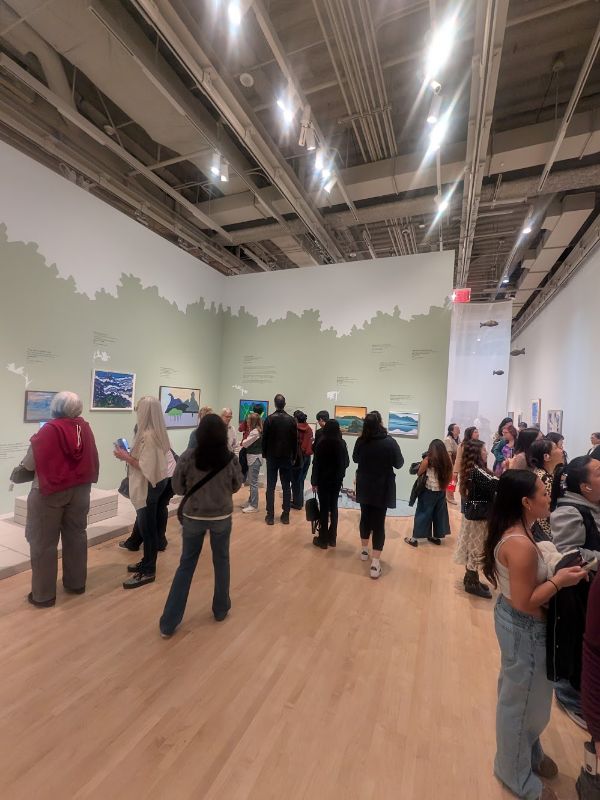
Not every exhibition needs to be a blockbuster
Working in audience and brand strategy at MHM, I spend a lot of time thinking about how cultural organisations connect with people, and what they want those relationships to become.
Exhibitions are one of the most powerful tools museums have to do this.
They can attract new audiences, deepen existing relationships, advance scholarship, challenge perceptions, strengthen cultural relevance, build reputation, generate income or reinforce a museum’s distinctive identity.
Some do several of these things exceptionally well.
But expecting every exhibition to deliver against every objective is a recipe for disappointment.
And judging them all primarily by attendance or revenue risks overlooking some of their most important contributions.
The most successful exhibition isn’t necessarily the one that attracts the most visitors. It’s the one that delivers the outcomes it was designed to achieve.
Which brings me back to something I noticed at SFMOMA.
The difference between a ticket sale and a relationship
On my way out, I spotted a membership promotion using the RMexhibition branding.
The proposition was simple: members could see the exhibition without an additional charge, and visitors could put the cost of their ticket towards membership.
SFMOMA also offers an exhibition-specific Encore Pass, encouraging repeat visits and giving people the option to put that purchase towards a full museum membership.
Smart thinking.
Here’s an exhibition with the potential to attract people who might not ordinarily visit SFMOMA, accompanied by a clear invitation to extend their relationship with the museum.
But there’s an important distinction.
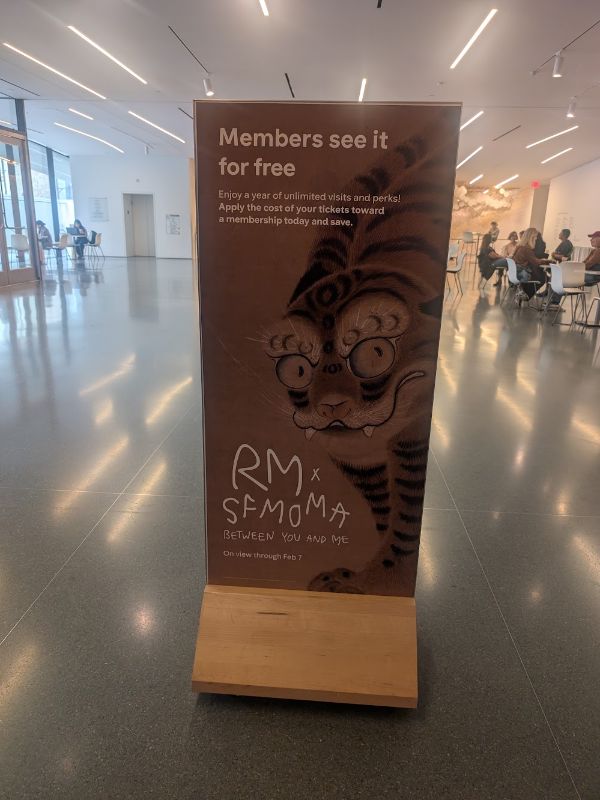
Converting an exhibition visitor into a member isn’t necessarily the same as converting their interest in one exhibition into a lasting relationship with the museum.
Someone might join because the financial calculation makes sense. Someone else might leave curious about contemporary art and eager to discover more.
Both could become members. But their motivations, expectations and likelihood of returning for something different may be quite different.
And that’s the bit I’d want to understand.
Will they come back for another exhibition? Explore the permanent collection? Bring a friend? Begin to see SFMOMA as somewhere that’s relevant to them?
Because audience acquisition and audience development aren’t the same thing.
Getting people through the door is one thing. Giving them a reason to come back is another. We all know the analogy of the leaky bucket by now.
Start with the outcome, not just the exhibition
This is where exhibition portfolio planning becomes really interesting.
Museums rightly start with artistic and curatorial ambition: the artist, the subject, the collection, the ideas they want to explore.
But what happens if we bring audience ambition into that conversation from the beginning?
Who could this exhibition matter to?
What might motivate them to visit?
What do we want people to experience, understand or feel?
What relationship are we trying to create or deepen?
And what should happen after they leave?
This is where understanding people’s motivations, and not just their demographics, becomes really useful. It’s also where psychographic segmentation comes into its own.
I’m a pretty textbook Stimulation Culture Segment myself. In between museum visits this week, I also bought a last-minute ticket to see Geese at the Fox in Oakland.
Apparently, my spontaneity is entirely predictable.
But that’s the thing about understanding audiences. People’s motivations give us clues about what might interest them, what will get them through the door and what might tempt them back.
These aren’t questions to ask once the exhibition has been programmed and the marketing team needs to sell tickets.
They’re questions that can help shape the proposition, the experience, the interpretation, the marketing and the measures of success.
They also help us think more strategically across an entire programme.
Some exhibitions might be important audience drivers. Others might deepen engagement, develop artistic understanding, build loyalty, strengthen reputation or establish a museum’s authority in a particular field.
The balance matters.
So does recognising that different exhibitions need different approaches to marketing, pricing, experience design and evaluation.
For one exhibition, success might mean reaching a large number of first-time visitors. For another, it might mean changing perceptions, encouraging more meaningful engagement or strengthening relationships with communities the museum hasn’t served particularly well.
For another, the primary contribution might be artistic, scholarly or reputational.
These are all legitimate ambitions. But they aren’t interchangeable.
At MHM, our exhibition research and strategy work has increasingly focused on helping museums understand these different roles, make more deliberate portfolio choices and build audience insight into exhibition planning from the outset.
It’s not about allowing audience demand to dictate curatorial decisions.
It’s about being clearer on how curatorial ambition translates into value for audiences, and ensuring the programme as a whole delivers on the museum’s purpose.
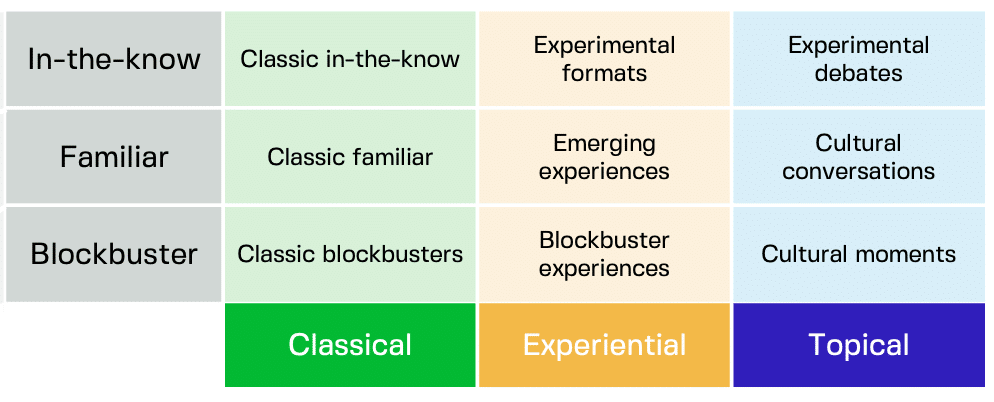
One question for every exhibition team
If I could encourage exhibition teams to ask one question at the start of planning, it would be:
What do we want to be different for people because this exhibition exists?
Not simply how many people will come.
Not just whether they’ll enjoy it.
But what will they take away? What might change in how they think or feel? What relationship might begin? And what might happen next?
Because exhibitions aren’t simply opportunities to show art.
They’re opportunities to change someone’s relationship with it, and perhaps with the museum itself.
Sometimes that relationship begins with a K-pop superstar. Sometimes with an artist whose work you’ve never encountered before.
Both can be extraordinary.
And after my week in San Francisco, I’m even more convinced that the future of exhibition planning isn’t about choosing between blockbusters and more specialist programming.
It’s about understanding the different contributions exhibitions can make, designing deliberately for those outcomes, and measuring what really matters.
Not every exhibition needs to be a blockbuster. But every exhibition should have a clear purpose.
At MHM, we help museums and galleries plan, test and evaluate exhibitions, and make more informed choices about their exhibition portfolios.
If you’re reviewing your programme, our Exhibition Portfolio Tool is a useful place to start.
Exhibitions aren’t what they used to be and neither are the people who visit them. Reframing the Exhibition, shows how audiences have changed the rules. Download our white paper. https://mhm.co/news/reframing-the-exhibition/
I’d love to hear from you: how do you balance exhibitions that bring new people through the doors with those that build deeper, lasting relationships?
Get in touch debbie.spence@mhm.co