Our Thinking
Building brand strategies from the outside in
Cultural organisations don’t generally have a shortage of brand guidelines. What they often have is a gap between what the organisation says it stands for and what people actually experience.
A brilliant brand identity can express a promise. It can’t make the organisation deliver it.
At Communicating the Arts Ottawa, Debbie Spence explored how design thinking can help cultural organisations build brand strategies from the outside in: starting with people, challenging assumptions, co-creating meaning and testing whether the promise works in practice.
Because your brand isn’t what appears on your website.
It is what people come to believe about you.
And that belief is shaped by far more than marketing: what you programme, how people are welcomed, the partnerships you choose, the behaviours you reward and the experience people have before, during and after a visit.
Every team is a brand team.
From brand guidelines to guiding the brand
A useful brand strategy should do more than describe an organisation.
It should help people make decisions.
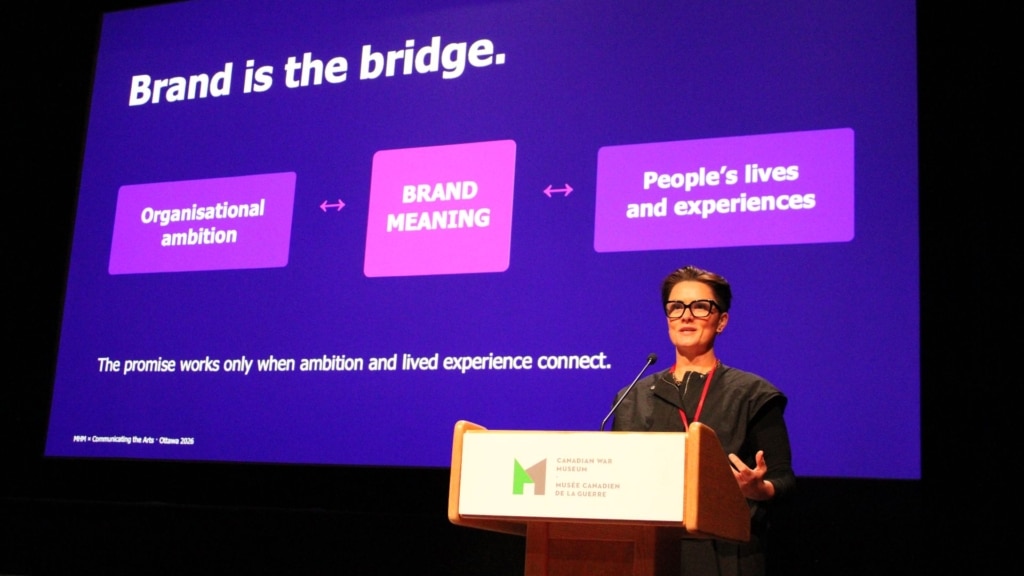
At MHM, we see brand strategy as the bridge between organisational ambition and people’s lives: what you want to stand for, why that should matter to people and how that meaning shows up in practice.
Design thinking gives us a practical way to get there:
Start with people.
Challenge assumptions.
Explore possibilities.
Test what works.
Not because co-creation means handing the strategy over to a focus group. And not because every workshop needs more Post-its.
Because the people who experience, deliver and support an organisation often see things its leadership team cannot.
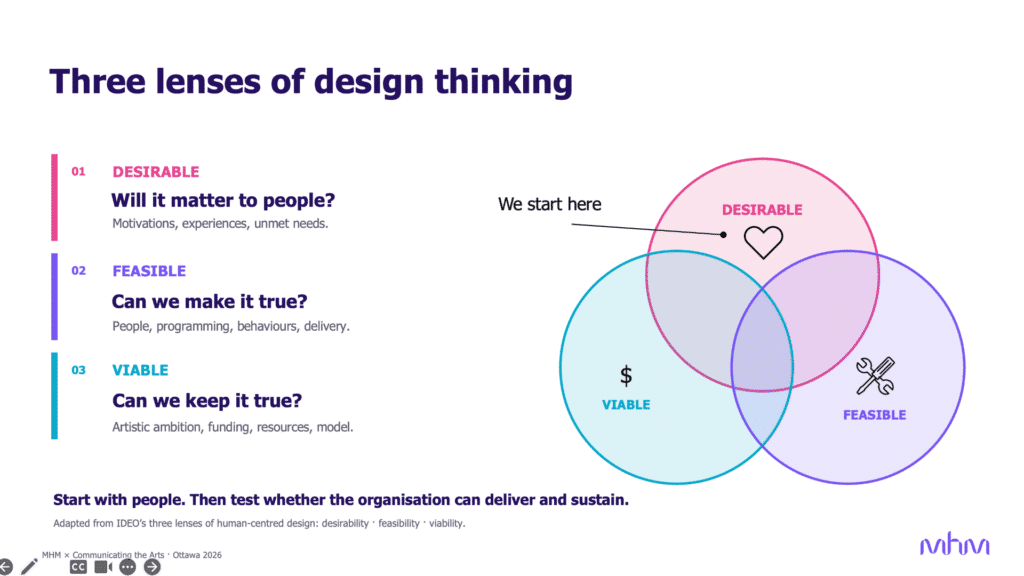
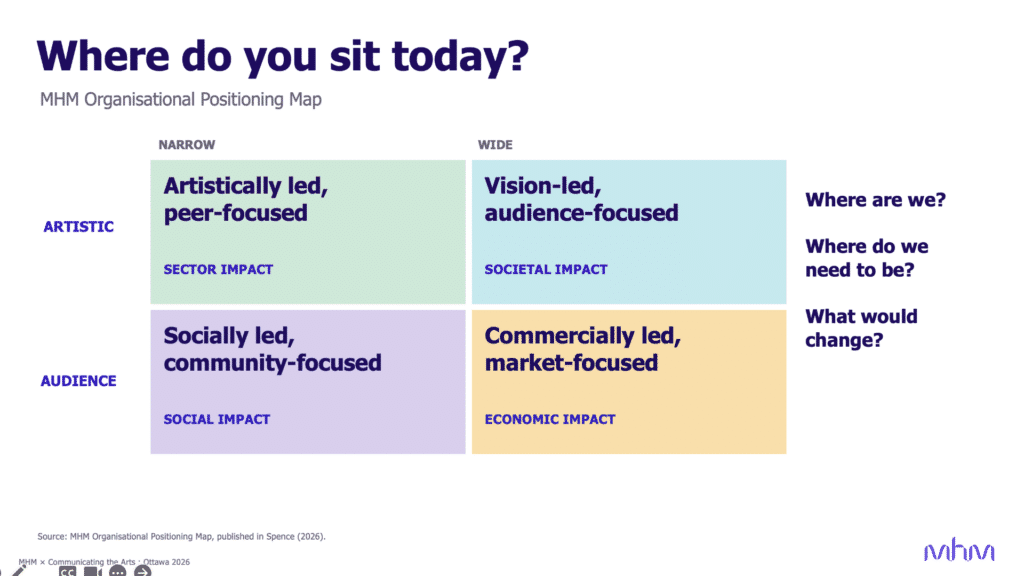
What happens when people help build the strategy?
Rather than asking people which strapline they prefer, we ask a more useful question:
What does this organisation make possible in people’s lives?
When people help investigate and shape the meaning, they are more likely to understand it, believe in it and see their role in making it real.
A quick test for your brand strategy
Five questions every cultural organisation should ask:
Is it aligned?
Does it advance your artistic and strategic direction?
Is it meaningful?
Does it matter to the people you want relationships with?
Is it credible?
Can your organisation actually deliver the promise?
Is it distinctive?
Is it recognisably yours, rather than another collection of sector clichés?
Is it usable?
Can somebody outside marketing use it to make a decision?
If you can’t say yes to these, you may have good brand copy. You probably don’t yet have a strategic tool.
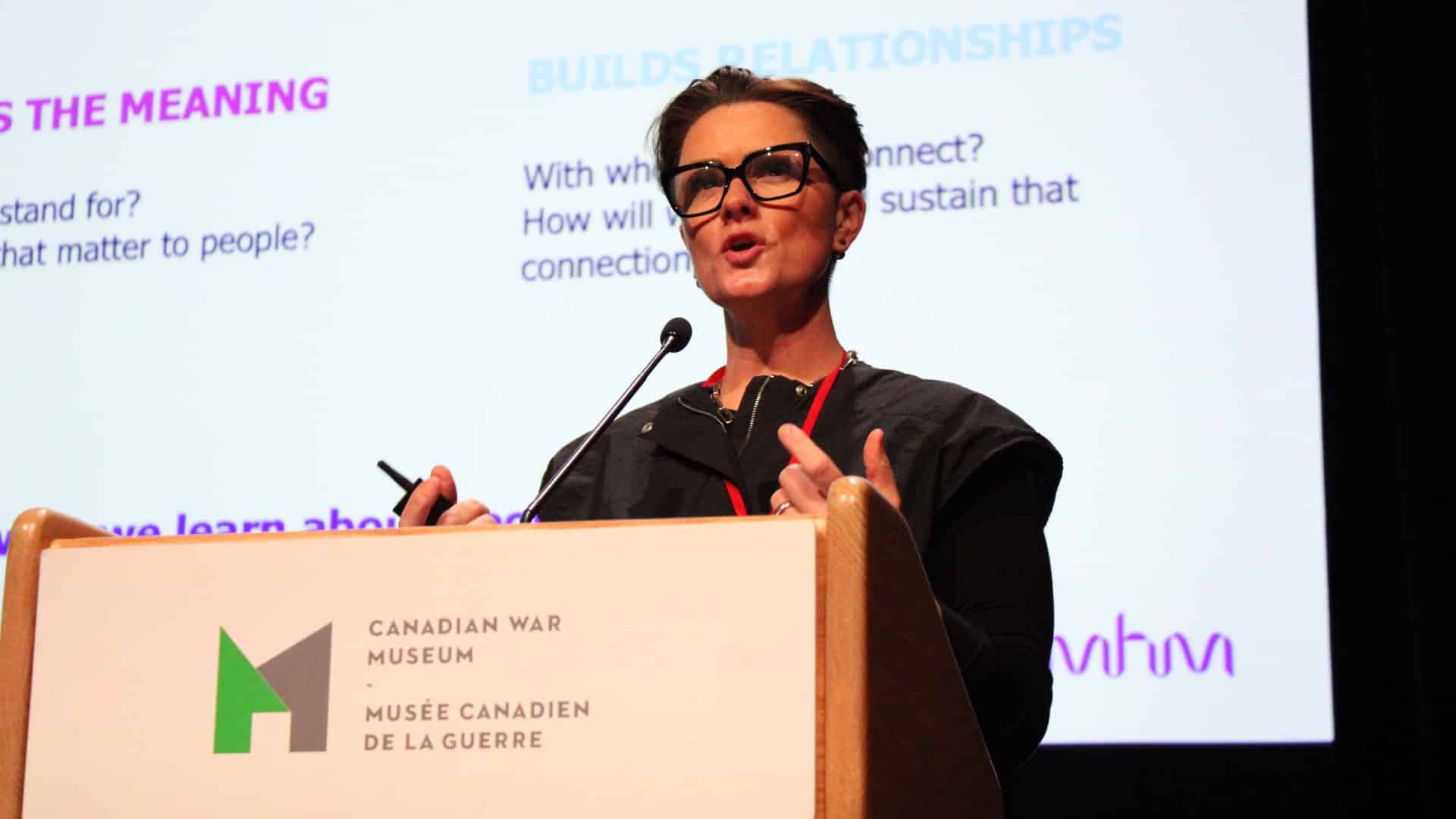
Photo credit: Natasha Pronko, Communicating the Arts Ottawa 2026.
Download our Design Thinking for Brand Strategy presentation
It includes practical frameworks, case studies and the Brand Intervention Canvas to help you challenge assumptions, uncover what matters to people and turn brand strategy into choices your organisation can actually use. We’d love to hear what you think and how you use it to develop your brand strategy.